How to tie a bandana
Historical context and modern 2026 styling
I have spent years watching accessories cycle through street style and runway collections. What started as a practical sweat-wiper for railway workers and ranchers in the late 1800s has completely transformed into a structured styling tool. By 2026, the piece is no longer just a nostalgic prop. It functions as a breathable sun shield, a minimalist layer for cold commutes, and a quick fix for messy hair days. The real challenge is mastering tension and knot placement without making it look forced. I usually break it down by placement, because the folding method changes entirely depending on where you want it to sit.
| Fabric type | Best use | Common mistake |
| Heavy cotton twill | Neck layering | Over-tightening the knot |
| Light silk blend | Head wrapping | Slipping due to smooth surface |
| Jersey stretch | Sports and training | Twisting the printed side |
How to tie a bandana around your head
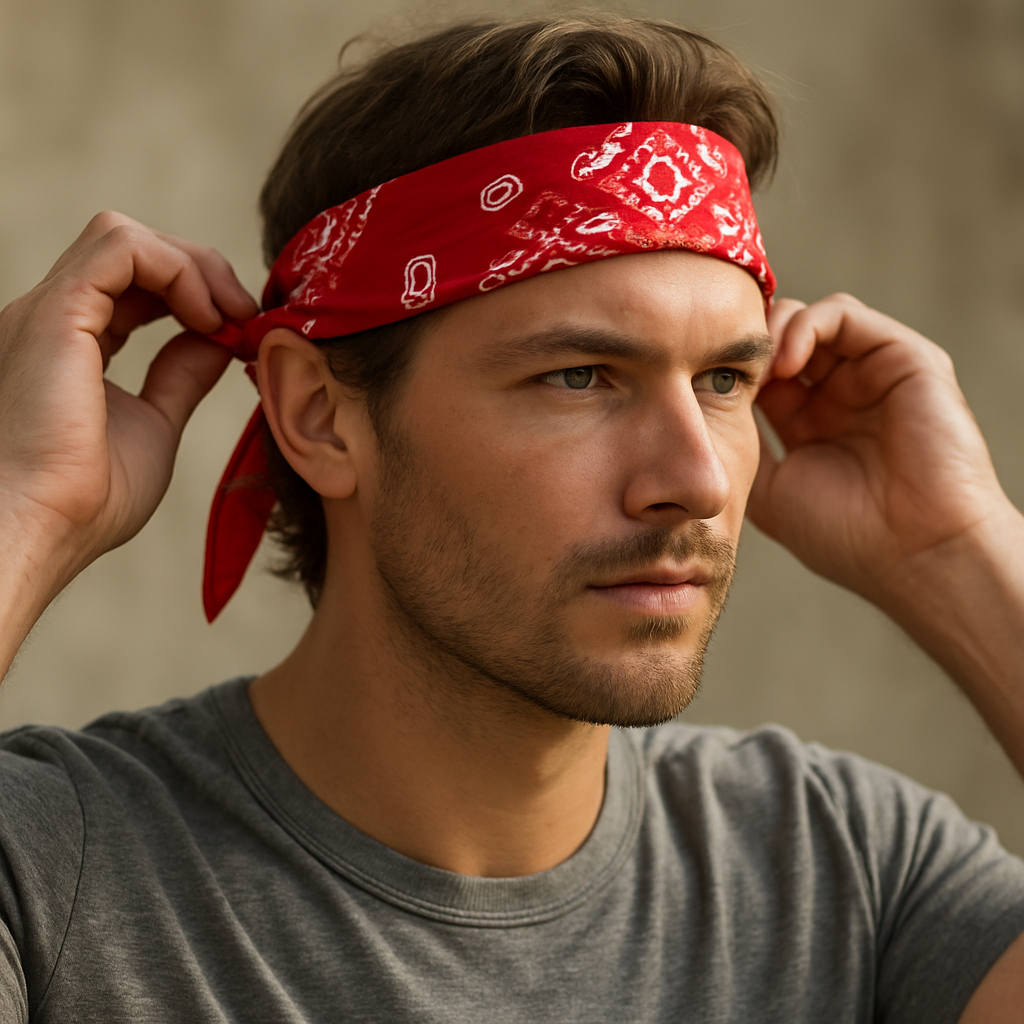
Lay the square flat on a clean surface. Fold it diagonally into a triangle, then roll the long edge inward until you get a strip about two inches wide. Place the center of that strip against your hairline, bring the ends to the back, and cross them once before knotting. If you want a cleaner silhouette, tuck the loose tails under the main wrap. The accesory should sit snug but not pull your hair. For longer locks, leave the ends loose to blend with a low ponytail.
- Check mirror angles to avoid uneven corners
- Use a light hairspray on the edges if the material slips
- Keep the fold width consistent for symmetrical results
How to tie a bandana around your neck
Neck placement relies on collar interaction and knot volume. I prefer starting with the fabric fully open, folding it into a narrow strip, and draping it over the chest before securing it at the nape. This method creates a subtle V-shape that works well under denim jackets and unbuttoned shirts. When you figure out how to tie a bandanna, you will notice the difference lies in the roll tightness. A thicker roll sits higher and looks more structured, while a flat fold drapes naturally against the collarbone.
How to tie a neckerchief
Traditional neckerchiefs require a tighter roll and a square knot. Fold the fabric into a narrow rope, cross the ends at the throat, pull them back slightly, and secure with a double overhand. This creates a compact knot that stays hidden under shirt collars. It is the go-to setup for vintage workwear aesthetics.
How to tie a handkerchief around your neck
Lightweight pieces demand a different approach. Roll them loosely into a rope, drape the ends unevenly, and secure with a single slip knot. Let the shorter tail hang free. The trick is leaving enough slack so it breathes against the skin. Many beginners pull it too tight and ruin the natural drape.
Style evolves when utility meets restraint. The best looks come from leaving room for movement rather than forcing rigid shapes.
How to tie a hair bandana
Headband styling requires less fabric manipulation. Fold the square into a thin strip, place it behind the ears, and cross the ends at the crown before knotting. Pull the knot forward slightly to sit just above the forehead. This setup keeps the piece secure during active days while framing the face. If you need extra hold, tuck a few front strands under the strip before securing the knot.
How to tie a neck bandana
The distinction between a standard wrap and a scarf drape comes down to length and layering. For a broader coverage approach, use a larger cut, fold it into a wide triangle, and drape it over one shoulder. Cross the longer end under the collar and let it hang asymmetrically. This works especially well with knitwear in transitional weather. The tecnique relies on balancing weight so it does not slide off when you move.
How to tie a bandana scarf
Scarf styling leans into relaxed layering. Drape the folded triangle across the chest, pull both ends over one shoulder, and secure them with a loose loop. You can adjust the knot tension depending on how much volume you want. This method pairs naturally with oversized blazers and structured coats.
How to tie a bandana around your neck men
Guys usually skip the tight knots and go for relaxed loops. I tell most of my friends to leave the fabric flat, cross it loosely at the front, and pull the ends back to secure under the collar. This creates a subtle accent without competing with the rest of the outfit. Stick to muted tones like charcoal, olive, or faded navy when pairing with workwear or minimalist coats.
How to tie a bandana for a girl
Lighter fabrics and playful placement open up more options. Try folding it into a thin headband, wrapping it around a high bun, or using it as a bag handle accent. For neck styling, a half-fold triangle draped over a turtleneck adds texture without bulk. Pairing it with layered chains or hoop earrings shifts the focus upward and balances the overall silhouette.
I have noticed a clear shift in how people approach these wraps over the last few years. The rigid, uniform looks of the past have been replaced by intentional asymmetry and mixed textures. Learning how to tie a bandana around neck properly means adjusting to daily movement rather than forcing static shapes. Whether you want to know how to tie a bandana neck for casual outings or how to tie a bandana in hair for active routines, the core principle remains the same: let the fabric settle naturally before heading out. You can check current styling archives to see how knot variations are being adapted for modern wardrobes. Experiment with fold widths, shift the knot slightly off-center, and observe how different cuts react to your usual layering pieces.